


Your most luxurious moisturizers are likely going to waste if you haven't mastered the art of the preparation. A thoughtful full body exfoliation is the essential bridge between simple cleansing and deep, restorative nourishment. We've all experienced the frustration of rough elbows, stubborn ingrown hairs, and a complexion that lacks its natural glow. It's common to feel confused by the sea of products or the conflicting advice on how much pressure to use during your routine.
You deserve a ritual that feels like a sanctuary while delivering visible, silky results. This guide reveals the professional secrets to a perfect exfoliation ritual that transforms your skin from dull to luminous. We will explore the 2026 shift toward barrier-safe enzymes, the "facialization" of body care, and how to create a sophisticated spa experience in your own home. Discover how to reveal your most radiant, velvety skin through intentional and mindful care. It's time to turn a basic chore into a moment of pure, restorative indulgence.
Key Takeaways
- Learn how to support your skin's natural renewal process by clearing away the surface cells that cause dullness and texture.
- Master the art of full body exfoliation by selecting the ideal tools and textures tailored to your unique skin sensitivity.
- Discover the professional technique of using gentle, circular motions on softened skin to achieve a uniform, luminous glow.
- Uncover why the three-minute window after your ritual is essential for locking in deep hydration with restorative oils and butters.
- Identify the subtle signs of over-exfoliation to ensure you maintain a healthy, resilient, and protected skin barrier.
What is Full Body Exfoliation and Why Does Your Skin Need It?
Radiant skin isn't just about what you put on it. It starts with what you take away. Exfoliation is the intentional removal of dead skin cells that linger on the surface. These cells can make your skin look tired, flat, and unexpectedly dry. By performing a regular full body exfoliation, you clear the path for fresh, healthy cells to shine. It's the first step in any serious self-care ritual. It transforms the texture of your skin from the very first touch.
To better understand this concept, watch this helpful video:
Your skin naturally renews itself through a process called cell turnover. In your youth, this happens quickly and efficiently. As we age, this cycle slows down. Dead cells accumulate. They create rough patches on your elbows and knees that no amount of lotion seems to fix. A consistent full body exfoliation mimics that youthful pace. It encourages the skin to behave more vibrantly. It boosts local circulation, bringing a healthy, natural flush to your limbs. Most importantly, it prepares your skin for the next step. Without those dead cells acting as a barrier, your luxury bath oils and rich body butters can penetrate deeper. They work more effectively. Your skin feels instantly softer and stays hydrated much longer.
The Difference Between Physical and Chemical Exfoliation
You have two main paths to choose from. Physical exfoliation uses granules like sugar or salt to manually buff the surface. It's tactile. It's satisfying. It feels like a gentle massage for your entire body. Chemical exfoliation uses natural acids or enzymes to dissolve the "glue" holding dead cells together. While both have their place, physical scrubs are often the preferred choice for the body. The skin on your legs and torso is thicker than the skin on your face. It requires a more direct approach to effectively reveal a hidden glow and smooth out stubborn texture.
Signs Your Body is Ready for a Scrub
How do you know when your body is ready for a scrub? Look for persistent ashiness on your legs. Feel for a sand-paper texture on your arms or heels. You might notice "strawberry legs" or small, rough bumps known as keratosis pilaris. These are clear signals that your skin is struggling to shed its outer layer. Exfoliation also plays a vital role in your grooming routine. It lifts trapped hairs before they become a problem. This prevents painful ingrowns and ensures a smoother result after you shave. Your skin will look clearer. It will feel more resilient and look remarkably luminous.
Essential Tools for Your Exfoliation Ritual
The right tools transform a mundane shower into a restorative ceremony. To master your full body exfoliation, you need more than just a product. You need a curated kit that respects your skin's unique needs. This selection process is deeply personal. It's about finding the balance between effective texture and gentle care. High-performance, natural ingredients are the non-negotiable standard for 2026. Avoid synthetic microbeads or harsh perfumes. Instead, look for plant-based oils and earth-derived minerals that nourish as they refine. A successful full body exfoliation relies on the harmony between your tools and your technique.
While the sensation of scrubbing is satisfying, it's vital to learn how to safely exfoliate at home. This ensures you don't compromise your skin's protective barrier. Using too much pressure or the wrong tool can lead to micro-tears and sensitivity. Always listen to your skin. If a tool feels too abrasive, switch to a softer alternative. Your goal is a healthy glow, not irritation. A mindful approach ensures your skin remains resilient and velvety to the touch.
Purity doesn't stop at the ingredients. Your tools must remain hygienic to be effective. Rinse mitts and gloves thoroughly after every use. Hang them in a well-ventilated area to dry completely. Damp environments are breeding grounds for bacteria. Brushes should be cleaned once a week with a gentle, natural soap and lukewarm water. This simple step prevents the buildup of old skin cells and keeps your ritual clean. It ensures that every session feels as fresh and indulgent as the first.
Natural Body Scrubs: Sugar vs. Salt
Sugar and salt offer different sensory experiences. Sugar granules are smaller and rounder. They dissolve quickly in warm water. This makes them ideal for sensitive areas or for those who prefer a more delicate touch. Sugar is also a natural humectant, helping to pull moisture into the skin. Salt is the choice for deep renewal. Its larger, mineral-rich grains are perfect for smoothing rough heels and knees. Understanding the science behind natural body scrubs allows you to choose the right foundation for your skin type.
Gloves, Mitts, and Brushes
Texture isn't just in the scrub. Exfoliating gloves provide unmatched precision. They allow you to feel the pressure you apply, ensuring every inch of skin is treated with care. Dry brushes are a different ritual entirely. Use them on dry skin before your bath to stimulate the lymphatic system and wake up the senses. For a lighter, daily refresh, a classic loofah or a soft cloth provides a subtle buff. Choosing the right accessory is the secret to a professional-grade result. Exploring our collection of handcrafted scrubs is the perfect way to begin your journey toward more luminous skin.
Step-by-Step Guide to a Professional Full Body Exfoliation
Achieving a spa-quality result at home requires more than just a premium product. It requires a methodical sequence and a steady, intentional pace. A true full body exfoliation is a slow practice of renewal. It's about listening to your body’s rhythm while applying the right pressure at the right time. By following a structured ritual, you ensure every inch of your skin receives the attention it deserves. This process doesn't just refine your texture; it resets your mind. It transforms a basic shower into a moment of profound self-care.
The Preparation Phase
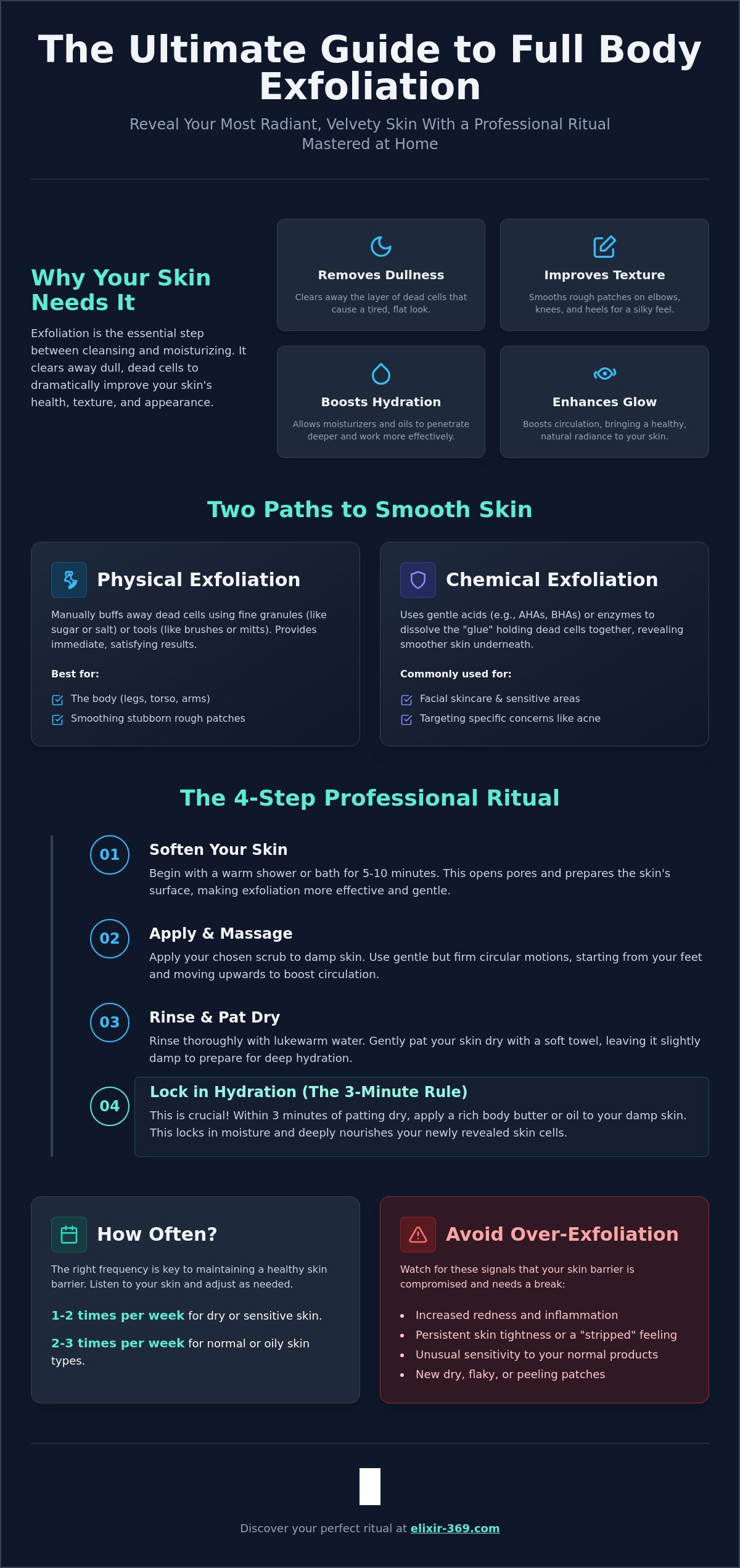
Heat is your first catalyst. Begin by spending at least five to ten minutes in a warm bath or shower. This time isn't just for relaxation. Warm water softens the skin's surface and prepares it to release dead cells without resistance. For an even more indulgent experience, you can incorporate bath oils into your soak. These oils begin the work of softening rough patches before you even reach for your scrub. Once your skin feels supple, ensure it remains damp but not dripping wet. This specific level of moisture provides the perfect "grip" for your exfoliant to perform effectively.
The Application Technique
Start at your foundation. Begin at the ankles and move upward in small, firm circular motions. This direction supports natural circulation and encourages lymphatic drainage. Don't rush the process. Your pressure should be steady but never painful. Following dermatologists' tips for safe exfoliation means adjusting your touch based on the area you're treating. Spend extra time on "high-friction" zones. Your elbows, knees, and heels can handle a more vigorous buff. Conversely, be extremely gentle on delicate areas like the chest and stomach where the skin is thinner. Continue this rhythmic pattern until you reach the base of your neck.
The Final Rinse
Rinsing is just as important as the scrubbing itself. Use lukewarm water to wash away every trace of the exfoliant. Hot water can be too aggressive on newly revealed skin, potentially stripping away natural moisture. Pay close attention to skin folds to ensure no granules remain. Once you step out, pat your skin dry gently with a plush, clean towel. Never rub. The signature "glow" you see in the mirror is the immediate result of fresh, healthy cells and a vibrant boost in surface circulation. Your skin is now perfectly primed for deep, lasting hydration.
Post-Exfoliation: Locking in Hydration and Radiance
The ritual of renewal is only half complete when you turn off the water. Your skin is now a blank canvas, receptive and deeply thirsty. A successful full body exfoliation removes the physical barriers that usually block your skincare. This means your products can finally perform at their highest potential. Without this follow-up care, your skin remains vulnerable to the environment. You must act quickly to seal in the moisture you've just invited to the surface. This is the moment where true radiance is either captured or lost.
You have a precise three-minute window to lock in hydration. As you pat your skin dry, some moisture remains in the upper layers. If you wait too long, the air begins to pull that water away. This leads to dehydration and a tight, uncomfortable sensation. By applying your treatments immediately, you trap that water. You create a protective shield. This simple timing shift is what separates a basic shower from a professional-grade treatment. It ensures your skin feels plump and resilient rather than stripped.
The Power of Body Butters
Body butters are the ultimate finishers for newly refined skin. Their rich, creamy textures provide a thick, protective seal. This is especially important after a scrub, as your skin’s natural oils have been gently buffed away. Look for formulas rich in natural fats like shea or cocoa. These ingredients don't just sit on the surface; they offer deep, lasting nourishment. Adopting a consistent body scrub and butter routine ensures your skin remains soft long after you leave the bathroom. It's an investment in your skin's long-term texture and health.
Layering for the Ultimate Glow
For those seeking a truly luminous finish, layering is the secret. Start with a lightweight bath oil while your skin is still slightly damp. The oil mimics your skin's natural sebum and absorbs almost instantly. Follow this with a generous layer of body butter to lock everything in place. This dual-action approach provides both immediate radiance and sustained hydration. The sensory experience of scented oils also serves to anchor your ritual, turning a routine task into a mindful reset. Consistent hydration is what extends the life of your results. It keeps your skin looking polished and feeling velvety for days. Browse our collection of restorative bath oils and butters to complete your self-care sanctuary.
Frequency and Safety: Avoiding Over-Exfoliation
Mastering the rhythm of renewal means knowing when to pause. A full body exfoliation is an act of luxury, but your skin's health always comes first. More frequent sessions don't always lead to faster results. In fact, over-exfoliation can strip your natural defenses. It leaves your skin feeling tight, reactive, and unexpectedly shiny. This "waxy" appearance is a sign that you've polished away too much of your protective barrier. True radiance comes from a balanced cycle of stimulation and rest. You're the best judge of your skin's resilience, so pay close attention to how it feels the day after your ritual.
Your needs change with the seasons. Winter air is unforgiving and often leaves skin brittle. During these months, choose gentler textures and reduce your frequency to avoid irritation. Summer brings a different set of challenges. Increased sweat, humidity, and layers of sunscreen can clog pores and lead to congestion. You may find your skin thrives with more regular attention during the warmer months. However, never exfoliate skin that's compromised. Sunburns, open cuts, or active inflammatory conditions require healing, not scrubbing. Wait until your skin's fully restored before resuming your practice.
How Often Should You Scrub?
Your skin type dictates your schedule. Sensitive skin requires a patient approach; once every ten days is often enough to maintain softness without distress. Normal or oily skin can typically handle a more active schedule of two to three times per week. This prevents the buildup of excess oils and dead cells. Always listen to the feedback your skin provides. If you feel a slight sting or see persistent redness, it's time to extend the gap between your full body exfoliation sessions. Consistency is more valuable than intensity.
Exfoliation Mistakes to Avoid
Avoid common pitfalls to protect your glow. Never use a body scrub on your face. The granules designed for your limbs are too large and abrasive for delicate facial skin. Let the product do the work for you. You don't need to apply heavy pressure; a light, circular touch is all it takes to refine the surface. Finally, never skip the hydration step. Leaving fresh skin exposed without a seal of moisture is a missed opportunity for lasting softness. Your ritual is complete only when your skin feels comforted, secure, and deeply nourished.
Embrace Your Most Luminous Self
A masterfully executed full body exfoliation is more than a beauty step. It is an intentional ritual of renewal. By removing the barriers of the past, you reveal a surface that is soft, resilient, and remarkably bright. Remember that the secret lies in the harmony of your technique and the purity of your products. Prioritize your skin's barrier, honor the three-minute hydration window, and adjust your pace with the changing seasons. This mindful approach ensures your skin remains a source of pride and comfort.
You deserve a self-care experience that feels as indulgent as it is effective. Elevate your ritual with Elixir-369’s natural body scrubs and butters. Each formula is crafted with natural, indulgent ingredients and sophisticated scents to recreate a spa-like sanctuary in your own home. Experience clean performance that delivers a healthy, radiant glow from head to toe. Your journey toward velvety, luminous skin is a personal ceremony worth celebrating every day. Step forward with quiet confidence and the glow you've always deserved.
Frequently Asked Questions
How often should I do a full body exfoliation?
Most skin types find their ideal rhythm between one and three times per week. If your skin is sensitive, a session every ten days is often sufficient to maintain a soft texture. Resilient or oily skin types may prefer the more frequent cadence of three times weekly. This steady pace ensures your skin stays vibrant without compromising its natural protective barrier.
Can I exfoliate my body every day?
Daily exfoliation is generally too aggressive for the skin's delicate ecosystem. Performing a full body exfoliation every day can lead to chronic inflammation and a compromised barrier. Your skin needs time between sessions to recover and build fresh, healthy cells. Stick to a rhythmic schedule that prioritizes rest and restorative hydration over constant friction.
Is it better to exfoliate before or after washing my body?
You should exfoliate after you have cleansed your skin with a gentle soap. Washing first removes surface sweat, debris, and environmental pollutants. This ensures your scrub can work directly on the dead skin cells without any interference. It makes your ritual more hygienic and allows the nourishing ingredients in your scrub to penetrate more effectively.
Should I exfoliate before or after shaving?
The most effective approach is to exfoliate before you begin shaving. This step lifts trapped hairs and clears away the dead cells that can clog your razor blade. It ensures a much closer, smoother shave and significantly reduces the risk of painful ingrown hairs. Your skin will feel remarkably velvety and look polished after this coordinated ritual.
What is the best natural ingredient for body exfoliation?
Sugar and salt remain the premier natural choices for a sophisticated renewal. Sugar is a gentle humectant that draws moisture into the skin, making it perfect for delicate areas. Salt offers a mineral-rich, deep buff that is ideal for smoothing rougher patches on the heels and elbows. Both provide a pure, effective way to achieve a luminous glow.
Can I use a body scrub on my face?
You should avoid using body-specific scrubs on your face. The granules in these products are typically larger and more abrasive than those designed for facial tissue. Using them on the face can cause micro-tears and persistent redness. Always choose a dedicated facial exfoliant that respects the thinner, more sensitive skin of your complexion.
How do I know if I am over-exfoliating my skin?
Signs of over-exfoliation include persistent redness, a stinging sensation, or an unusually shiny, waxy appearance. If your skin feels uncomfortably tight even after applying a rich butter, you have likely buffed away too much of your barrier. These signals are your skin's way of asking for a pause. Listen to this feedback and extend the time between your sessions.
What should I do if my skin is irritated after exfoliating?
Stop all exfoliating activities immediately and focus on soothing, restorative care. Apply fragrance-free oils or butters rich in natural fats to calm the irritation and rebuild the barrier. Avoid hot water and abrasive fabrics until your skin feels comfortable again. Patience is essential during this recovery phase to ensure your skin regains its natural resilience and health.